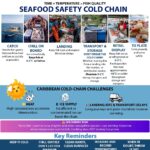
Maintaining the cold chain is essential for preserving fish quality and ensuring seafood safety. From the moment fish are caught until they reach the consumer’s plate, proper temperature control helps reduce spoilage, maintain freshness, and protect public health.
Catch
Handle fish gently and remove them from heat and direct sunlight as quickly as possible. Proper handling at the point of capture is the first step in maintaining quality.
Chill on Board
Ice fish immediately after capture. Fresh fish should be kept at 0°C to 2°C or below to slow deterioration and preserve freshness, texture, and quality.
Landing
Keep fish iced and shaded and minimise delays during landing and offloading. The longer fish are exposed to warm temperatures, the greater the risk of quality loss.
Transport and Storage
Don’t break the cold chain. Whether fish are being moved from a landing site, fish market, or distribution centre, temperatures should be maintained between 0°C and 2°C throughout transport and storage.
Retail Display
Fresh fish should be displayed on ice or under refrigeration at 0°C to 2°C. Frozen fish should be maintained at approximately −18°C or colder throughout storage and transport.
To Plate
Fish should be cooked properly and served safely to ensure consumers receive a high-quality and safe product.
Key Reminders
- Keep fresh fish as close to 0°C as possible. The colder, the safer.
- Chill fish quickly and don’t let fish warm up.
- Use clean hands and clean surfaces to prevent cross-contamination.
- Measure and record temperatures. Don’t guess. Use a thermometer.
- When in doubt, throw it out. Food safety always comes first.
Caribbean Cold-Chain Challenges
Landing-Site and Transport Delays
Long journeys and poor insulation can increase warming and reduce fish quality before products reach the market.
Heat
High Caribbean temperatures accelerate deterioration and shorten shelf life when fish are not properly chilled.
Ice Supply
Insufficient or contaminated ice can break the cold chain and compromise seafood safety and quality.
Histamine Risk
Some fish species, such as tuna, kingfish, and other susceptible species, can develop histamine when temperature control fails. Once histamine forms, it cannot be destroyed by cooking, making proper cold-chain management critical.
Ice Is Your First Refrigerator
Clean ice, enough ice, and continuous icing are the foundation of better fish quality and safer seafood. Maintaining a continuous cold chain from catch to consumption helps reduce waste, improve food safety, and deliver higher-quality seafood to consumers.
Remember:
Time + Temperature = Fish Quality. Keeping fish cold every step of the journey protects both product quality and consumer health.






 Shiva DeokiesinghAugust 22, 20262 Mins read


Leave a comment