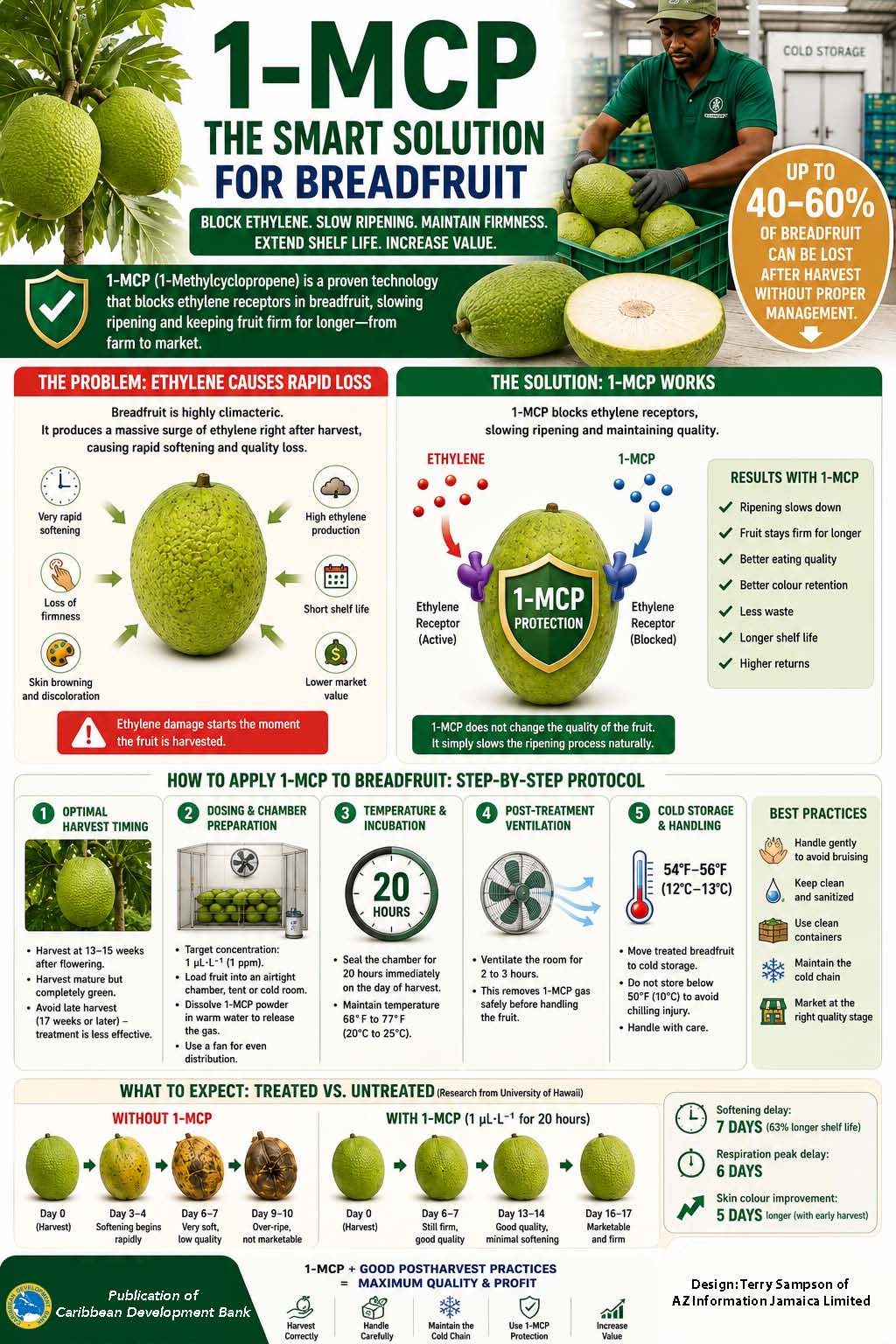
Breadfruit is a highly climacteric fruit, meaning it produces a surge of ethylene after harvest that triggers rapid ripening. This often leads to quick softening, loss of firmness, skin browning, a short shelf life, and reduced market value. Without proper postharvest management, significant losses can occur before the fruit reaches consumers.
The Problem: Ethylene Causes Rapid Quality Loss
After harvest, breadfruit begins to produce high levels of ethylene, a natural plant hormone that accelerates ripening. As a result, fruit quality can decline rapidly through:
- Very rapid softening
- Loss of firmness
- Skin browning and discoloration
- Reduced shelf life
- Lower market value
Ethylene-related deterioration begins as soon as the fruit is harvested, making effective postharvest management critical.
The Solution: How 1-MCP Works
1-MCP (1-Methylcyclopropene) is a proven postharvest technology that slows the ripening process by blocking ethylene receptors in breadfruit.
By preventing ethylene from binding to these receptors, 1-MCP helps maintain fruit quality for a longer period without altering the fruit itself. Instead, it slows the natural ripening process, giving producers, traders, and retailers more time to market and sell their products.
Benefits of 1-MCP Treatment
Using 1-MCP can provide several important benefits:
- Slower ripening
- Longer-lasting firmness
- Better eating quality
- Improved colour retention
- Reduced waste
- Extended shelf life
- Higher market returns
How to Apply 1-MCP to Breadfruit
1. Harvest at the Right Time
- Harvest approximately 13 to 15 weeks after flowering.
- Harvest fruit when mature but still completely green.
- Avoid late harvests, as treatment becomes less effective when fruit is overly mature.
2. Prepare the Treatment Chamber
- Use an airtight chamber, tent, or cold room.
- Target a concentration of 1 µL L⁻¹ (1 ppm).
- Dissolve the 1-MCP product in warm water to release the gas.
- Use a fan to ensure even distribution throughout the chamber.
3. Incubate the Fruit
- Seal the chamber immediately on the day of harvest.
- Maintain temperatures between 20°C and 25°C (68°F to 77°F).
- Keep fruit exposed to the treatment for approximately 20 hours.
4. Ventilate After Treatment
- Ventilate the chamber for two to three hours after treatment.
- This safely removes any remaining 1-MCP gas before handling the fruit.
5. Store and Handle Carefully
- Move treated breadfruit into cold storage.
- Maintain storage temperatures of approximately 12°C to 13°C (54°F to 56°F).
- Avoid temperatures below 10°C (50°F) to prevent chilling injury.
- Handle fruit carefully to minimize damage.
Best Practices
To maximise the benefits of 1-MCP:
- Handle fruit gently to avoid bruising.
- Maintain clean and sanitary conditions.
- Use clean containers.
- Preserve the cold chain throughout storage and transport.
- Market fruit at the appropriate stage of maturity.
What to Expect
Compared with untreated breadfruit, fruit treated with 1-MCP remains firm and marketable for a significantly longer period.
Research has shown:
- Softening can be delayed by approximately 7 days.
- The respiration peak can be delayed by approximately 6 days.
- Skin colour retention can be improved by approximately 5 days, particularly when fruit is harvested early.
Why It Matters
Postharvest losses can account for a substantial proportion of breadfruit production after harvest. Technologies such as 1-MCP provide producers and value chain actors with a practical tool to slow ripening, reduce losses, maintain quality, and increase profitability.
Key Takeaway
1-MCP, combined with good postharvest practices, can help maintain breadfruit quality, extend shelf life, reduce waste, and increase value from farm to market.





 Shiva DeokiesinghAugust 22, 20262 Mins read




Leave a comment